The problem with my perfectly reasonable life
My kids still think I’m one of the coolest people. For now.
One day, very soon, I’ll suggest something fun to my kids and they’ll look at me with the polite boredom usually reserved for insurance paperwork.
My kids are 12, 10 and 6. Right now, I am still one of their favourite humans they want to hang out with. This is both lovely and deeply suspicious, because I know it can turn fast.
I just returned from the cinema, where I watched The Mandalorian with my son. He still wants me next to him. Still wants the shared snacks. Still wants the whispered commentary. Still thinks being with Dad is part of the fun and not the logistical price of getting there.
I know that won’t always be true. Which is exactly why it matters now.
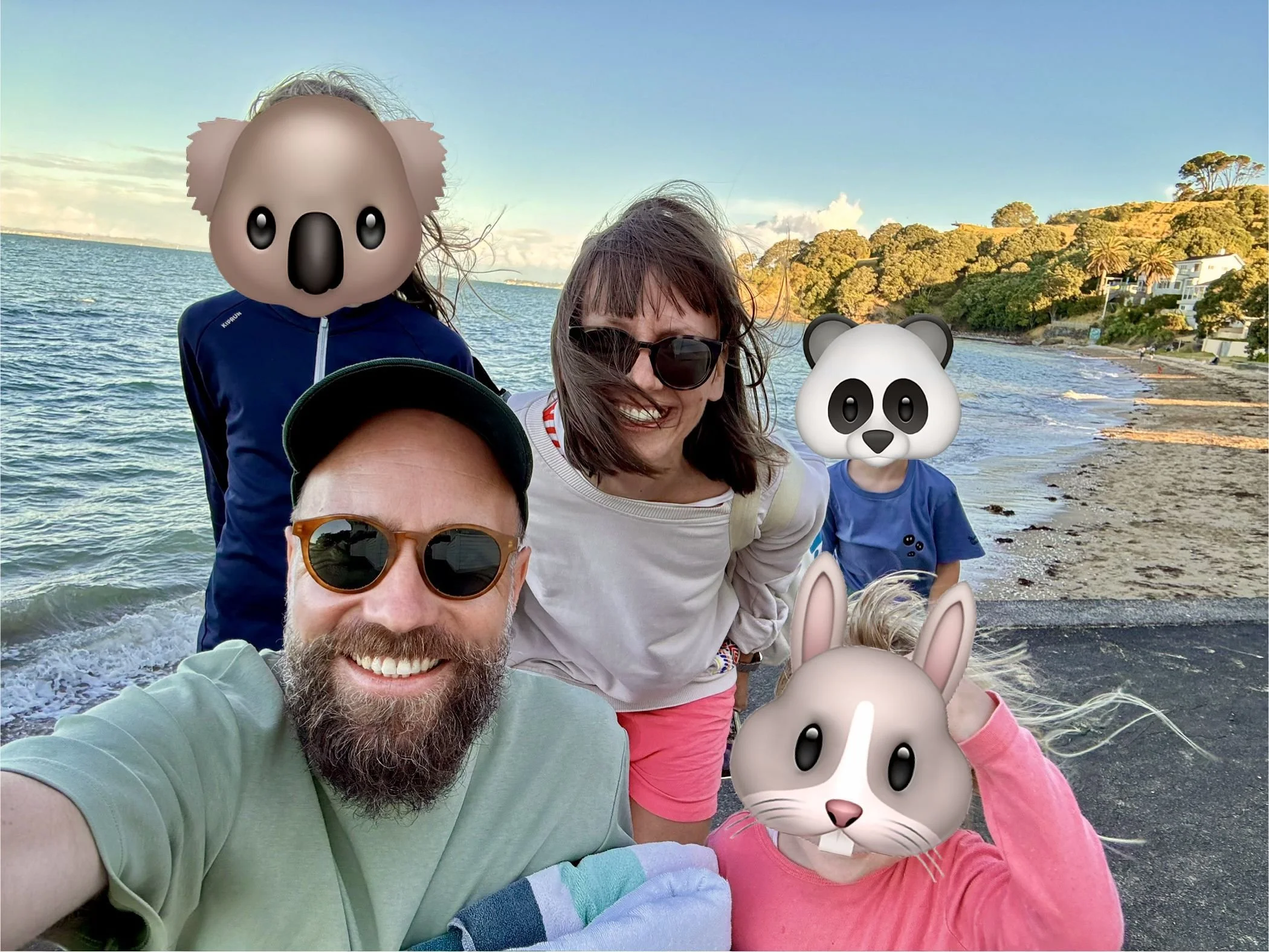
At some point, friends become the main event. Parents become the ride. Family trips become negotiations. And “let’s explore a new city together” becomes “is there WiFi and can I bring someone?”
This is healthy but also slightly heartbreaking if you think about it for more than seven seconds.
And I’ve been thinking about it for longer than seven seconds.
Because there’s a question I can’t quite put back in the drawer:
What if the real risk is letting the window close?
For years, I thought responsibility looked like stability. Good job. Reliable salary. Calendar full of important-looking rectangles. Build the side projects at night. Travel during school holidays. Be grateful. Don’t make things unnecessarily complicated.
And honestly, that is not a stupid life. It’s a pretty good one.
But lately, the old restlessness has been back (again).
(I’ve had this feeling before. I know that feeling. It usually shows up before a sabbatical, a move to a different city, culture or country, or one of those life decisions other people later call “courageous” - which is usually just the socially acceptable version of: are you sure this is a good idea?)
We may only have a few more years where all five of us can move through the world as a pack and have it feel like an adventure, not a punishment. A few more years where living near the sea for a while, exploring new cities, eating unfamiliar food, meeting people in other countries and seeing how they live could actually become part of who the kids are.
Not as a “someday” fantasy.
As a real thing.
With backpacks, arguments, train stations, bad sandwiches, great breakfasts, and someone inevitably needing the toilet at the worst possible moment.
That’s the version I keep seeing. Not the Instagram version. The actual version.
Five people somewhere else, slightly tired, probably underprepared, but awake.
A few months ago, my friend Johannes put The Pathless Path by Paul Millerd on my radar. Johannes is a critical futurist and works around technology and the changing shape of work, so this was not a random airport-bookstore recommendation.
He thought it might land with me.
It did.
Annoyingly well.
I started reading it and took photos of half the pages, (yes, I still read paperbacks and then either have to pull out a pen or take a photo like a very inefficient archivist).
Millerd writes about the “default path”: the good education, the stable job, the next logical step, the salary, the title, the adult life that makes sense to other people.
The annoying thing is that the default path works.
That’s why it’s dangerous.
If it were obviously terrible, leaving would be easy. But it’s not terrible. It gives you structure, money, status, safety, and a very convenient answer when someone asks what you do.
I’ve been on that path for a long time. Twelve years, depending on how you count it. And I don’t regret it.
I also did several sabbaticals and interruptions along the way, kinda like early retirement phases, because why wait until I’m 67?!
I studied architecture. Moved into content, brand building and marketing. Learned how companies communicate, and how often they don’t. Worked with smart people, and also with annoying colleagues (that’s part of the bundle). Built things on the side. Failed at some. Kept a few alive. Tried again………This chapter taught me a lot.
How to read a room. How to turn vague ideas into something usable. How to sell an idea without making everyone allergic to it. How to survive meetings where the real agenda is hiding under three layers of politeness. How to navigate corporate politics at C-level. How to optimize the minimum-effort, maximum-return strategy that works in almost every large corporate, even though nobody is allowed to say that out loud.
Useful skills.
But useful skills can become expensive if they keep you in the wrong room for too long.
That’s the part I’ve been sitting with.
Because being good at something is a trap people don’t warn you about. You get paid. You get trusted. You get responsibility. Your calendar fills up. People need your opinion. You become the person who can solve that kind of problem.
Necessary, almost.
Not really, of course. Everyone can be replaced in a few weeks. If you don’t believe me, take a proper vacation, three weeks or more. When you come back, you’ll realize the company did not collapse, the sun still came up, and you were probably not as important as your calendar wanted you to believe.
Still, the feeling is seductive.
And then one day, very quietly, you realize:
“I can do this well” is not the same as “I should do this forever.”
That sentence is annoying because it is true.
Five years ago, we made a big decision very quickly. We decided to leave Berlin and move to Merano. There was no grand five-year plan. No elegant strategy deck. No risk matrix with calming colours.
At the end of May 2021, pretty much today five years ago, we decided.
By August 20th, we lived here.
Apartment in Berlin gone. Kids packed. Life moved.
Two and a half months between “maybe” and “this is our life now.”
From the outside, that probably looked a bit reckless. From the inside, it felt obvious. We wanted the kids to grow up closer to nature. We wanted mountains. A smaller place. A different pace. A life that felt more ours.
So we moved. And it worked.
Not perfectly, because South Tyrol is not a postcard. It also has emails, taxes, dentist appointments, school chats, lots of tourists, and I mean a lot, and drivers who have never heard of the ‘Reißverschlussverfahren’, (the zipper-merge concept that asks two lanes to become one without everybody losing their mind). There were also quite a few personal challenges that midlife threw at us here over the past years, because life likes to keep the script spicy.
But it worked. We built a life here.
That’s why this current feeling doesn’t feel like a crisis. It feels like the next version of the same instinct.
The question is not “How do I escape my life?”
The question is: “What’s next?”
What wants to be built now?
Millerd uses a phrase I would normally dislike: “coming alive over getting ahead.”
It sounds like something printed on a tote bag next to a 38-euro candle. But I hate that it works.
Getting ahead is easy to measure: salary, title, company name, revenue, square meters, the number of people in a meeting who nod when you speak.
Coming alive is harder to fake.
I know when it happens. It happens when I build something from scratch. When I find a tiny European brand making something beautiful. When I work on a holiday apartment and suddenly the room clicks. When I write a sentence that sounds like a person. When I think about a business that is small, useful, tasteful and real.
I already do a lot of this. More than most people, probably.
But too much of it still happens in the margins.
Early mornings. Late nights. Weekends. Notes. Tabs. Half-built ideas. Small experiments squeezed between the official® parts of life.
And lately I’ve been wondering what happens if the margins become the main thing.
More projects I own. More places we choose. More work that makes me curious. More time with my favourite people while they still think being with me is a decent use of a Saturday.
Not forever and not as a dramatic manifesto.
Just for the next chapter.
One of the strongest ideas in the book is “enough.”
Millerd writes that if you don’t define enough, you default to more. That sentence should be taped to every office coffee machine in Europe.
Because “more” is the most socially acceptable way to avoid a decision.
More money. More safety. More preparation. More thinking it through. More proof. More perfectionism. More years. More “after summer.” More “when things calm down,” which is funny because things never calm down. They just change outfit.
I keep thinking about something New York psychotherapist Phil Stutz says: pain, uncertainty and constant work are basically the unavoidable ingredients of life. Cheerful stuff. But also useful. If those things are coming anyway, waiting until everything feels painless, certain and easy is a pretty bad strategy.
That’s where “enough” gets uncomfortable.
Because enough sounds modest. Almost boring. But in real life, enough is the line where you can no longer hide behind more.
More money would be nice, obviously. More structure too. More certainty. More time to think. More proof that this is the right move. But at some point, “more” stops being preparation and starts becoming delay with better branding.
I’ve been thinking about my version of enough.
Enough money to not be reckless. Enough structure to not turn family life into a circus. Enough risk to make the next chapter feel alive. Enough freedom to spend more time with the kids while they still want me there.
And the uncomfortable part is that I may already be closer to enough than I want to admit.
Not reckless. Not naïve. Not pretending that money, school, clients and rent are charming little details the universe will figure out for me.
Just less.
Less than the number you invent when you’re scared. Less than the finish line that moves every time you approach it. Less than “one day.”
“One day” is a very elegant trap.
One day we’ll travel more. One day I’ll build more of my own projects. One day I’ll spend my mornings differently. One day I’ll stop pretending that the safest option is automatically the most responsible one.
One day sounds wise, but often, it just means no.
For the past years, I’ve had a small note on my desk with a line by Rumi:
“As you start to walk on the way, the way appears.”
I’ve had that note on my desk for years, and I’ve tried to take it seriously.
Moving to Merano was part of that. Sabbaticals too. Building side projects before they had a proper place in my life.
But lately, the line has started to feel less like a nice reminder and more like a small accusation.
Because it means you don’t get the full map before you start. You don’t get to remove all uncertainty, solve the next ten years, and then move. Which would be lovely. I would personally enjoy that service. Ideally as a PDF, (labelled life_finalfinalv2.pdf, obviously).
But no.
The way appears as you walk.
Not before.
So maybe the job is not to solve the whole life. Maybe the job is to stop lying about what you already know.
I know that this family window is open now. I know that it will not stay open forever.
I know that the work I’m most curious about is increasingly the work I build myself.
I know that the life we built in Merano started with a decision that looked unreasonable before it became obvious. And I know that “someday” has started to sound a little too much like “never.”
I’m not writing this as an announcement. Not yet.
More like a note from the edge of a chapter.
The last time we made a big life decision, we didn’t have the whole path. We had a direction, a feeling, and enough courage to pack the boxes.
Maybe That’s all you get at the beginning.
That’s enough.
Read The Pathless Path by Paul Millerd if your perfectly reasonable life has started to feel suspiciously tight around the edges.
Just don’t blame me if you start taking photos of half the pages too.