Babylonstoren — the most impressive farm-stay ever
Three weeks ago, Sina and I came back from a short trip to South Africa. We pre-booked two things: the flights and two nights at Babylonstoren. Everything else we left open on purpose. I wrote up the full route and places in a separate post.
This one is about our experiences at Babylonstoren.
A little context…
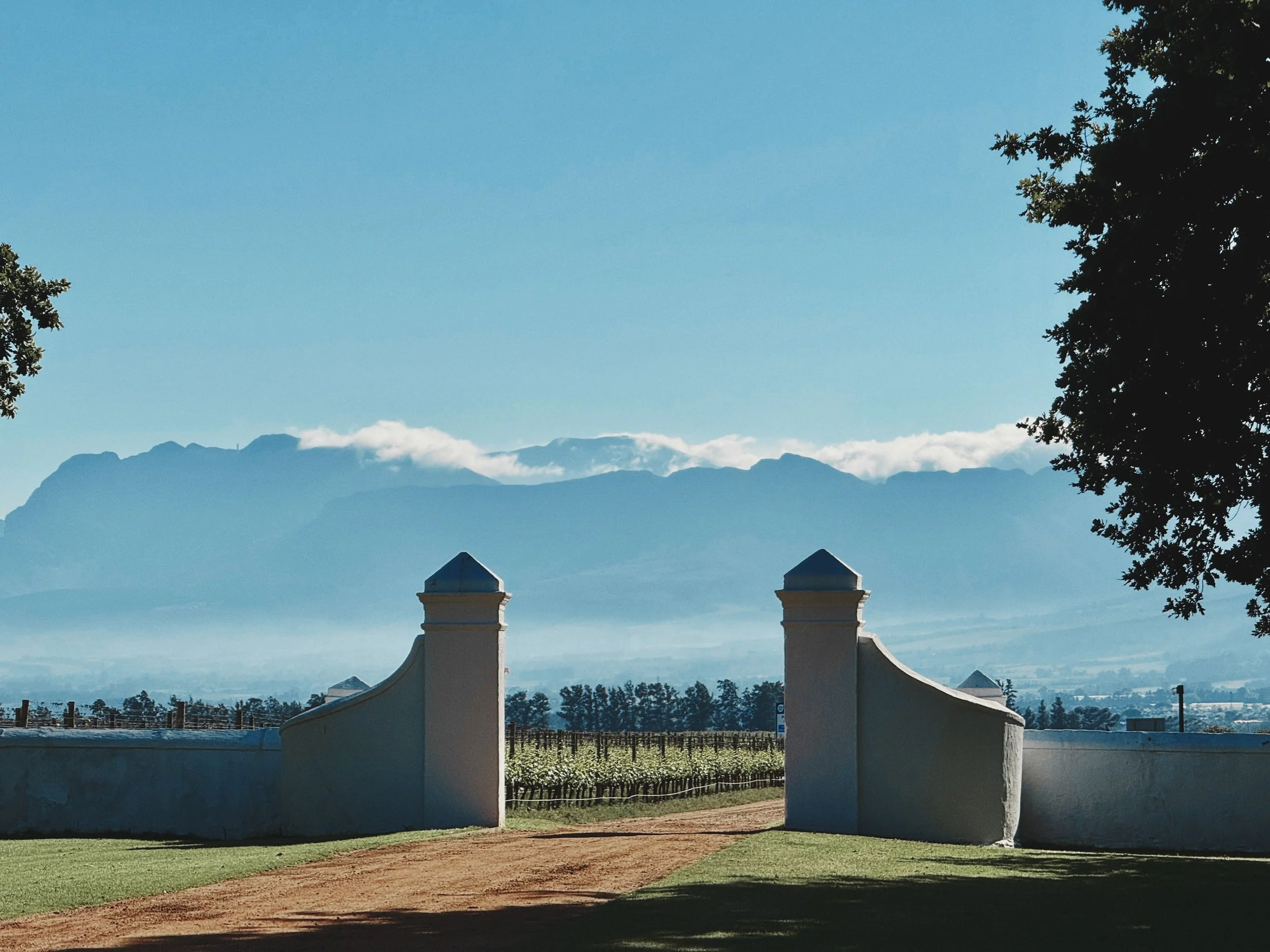
Thirty minutes from Stellenbosch, you roll past vineyards and white gables toward a small hill—a koppie—that early owners thought looked like the Tower of Babel. The name stuck: Babylonstoren. The farm goes back to 1692, but the version you walk today began in 2007, when Koos Bekker and Karen Roos took it on and opened to guests in 2010. They asked French architect Patrice Taravella to sketch the garden, which is why it reads like edited abundance—order, a little wild, then order again. There are a few more places in UK and also Italy run by the same owners.
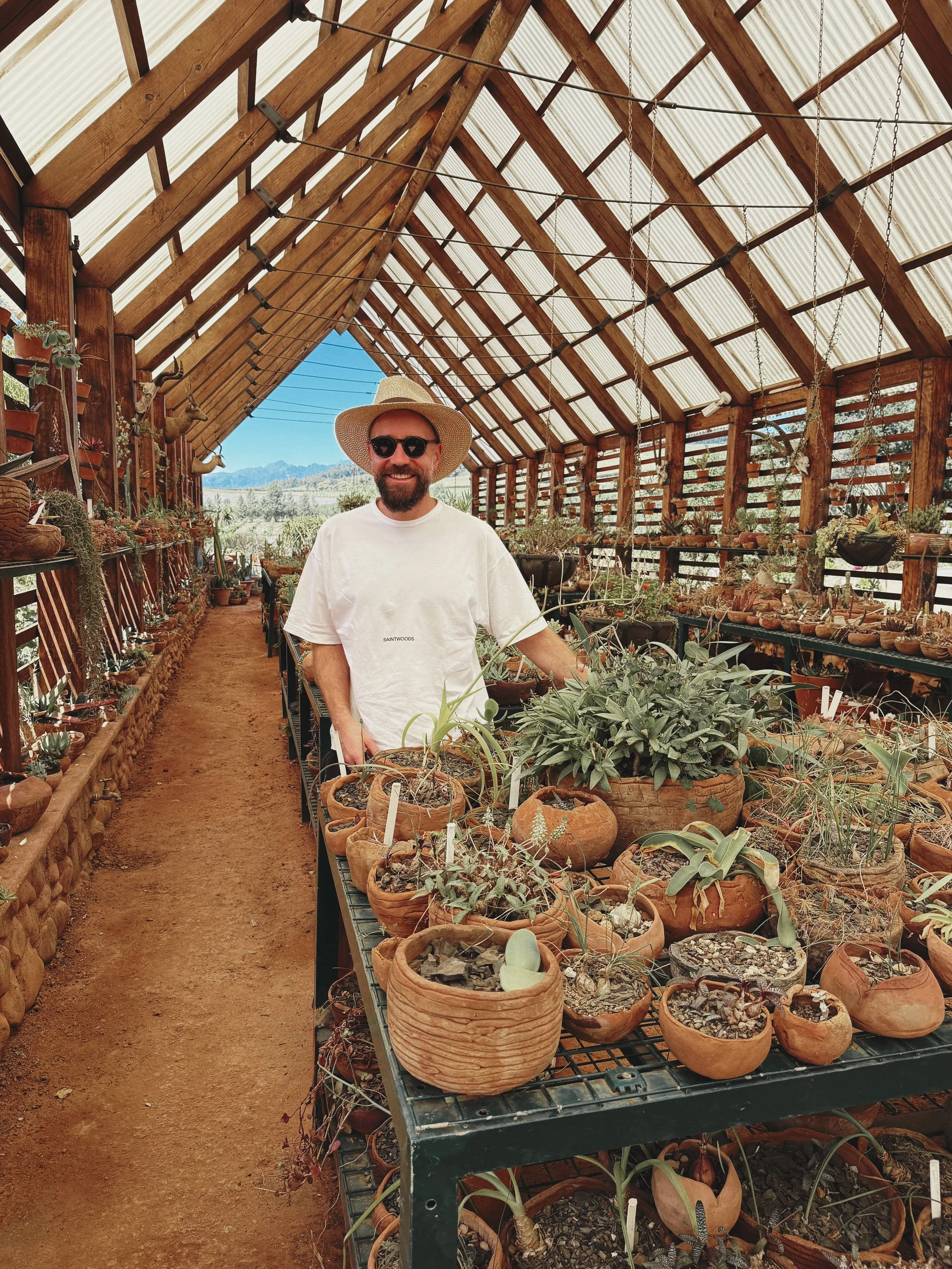
And it really is a farm. Everything’s organic and you’re encouraged to pick and taste as you wander. There’s a Scented Room where leaves turn into essential oils. Down the path, a dairy built on water buffalo—their milk shows up later as gelato and mozzarella. Somewhere between the Greenhouse and Babel you realise none of this reads like “amenities.” It reads like a small world with its own rhythm.
Two days here feel bigger than two days.
© Babylonstoren
First impressions
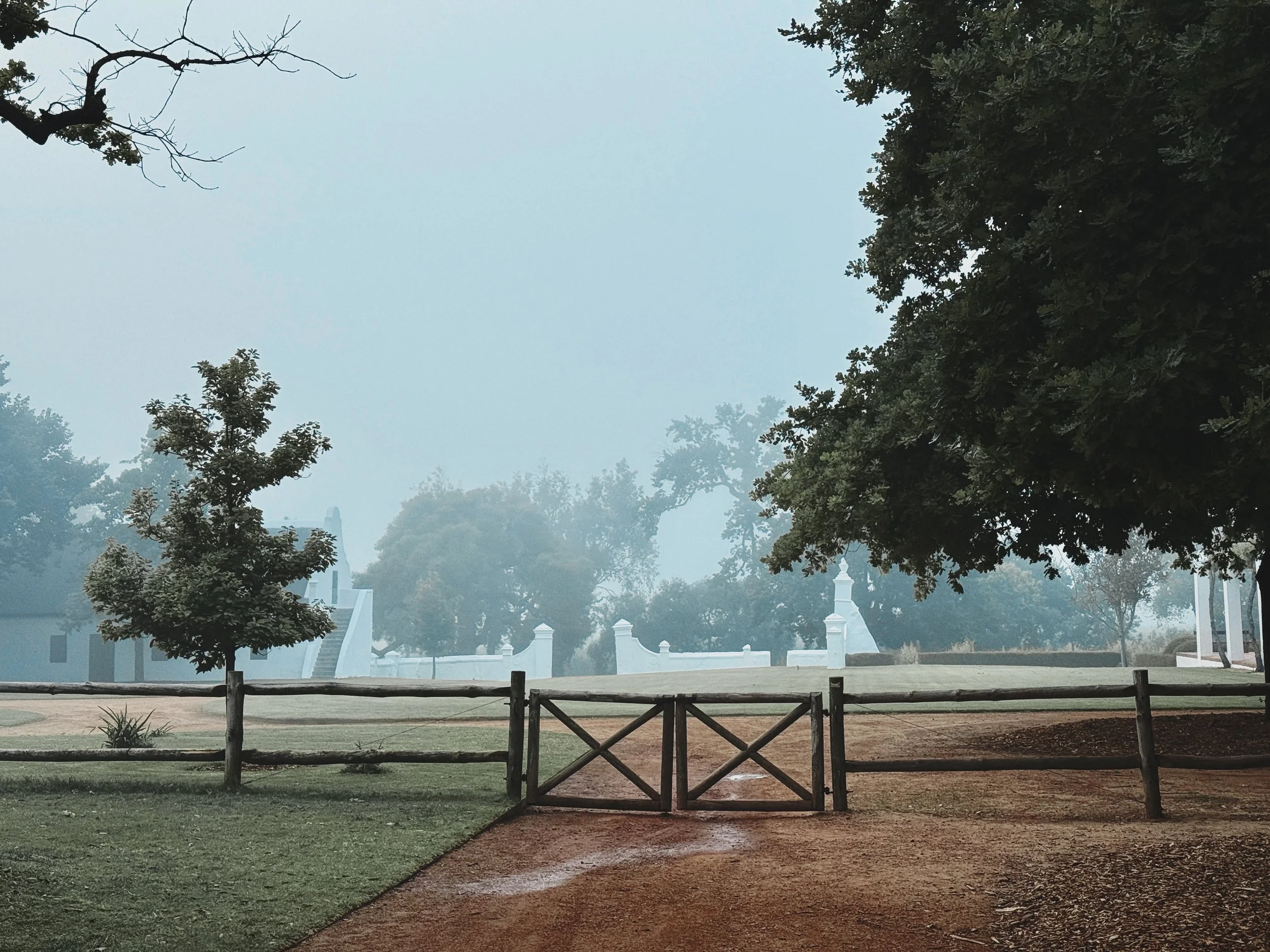
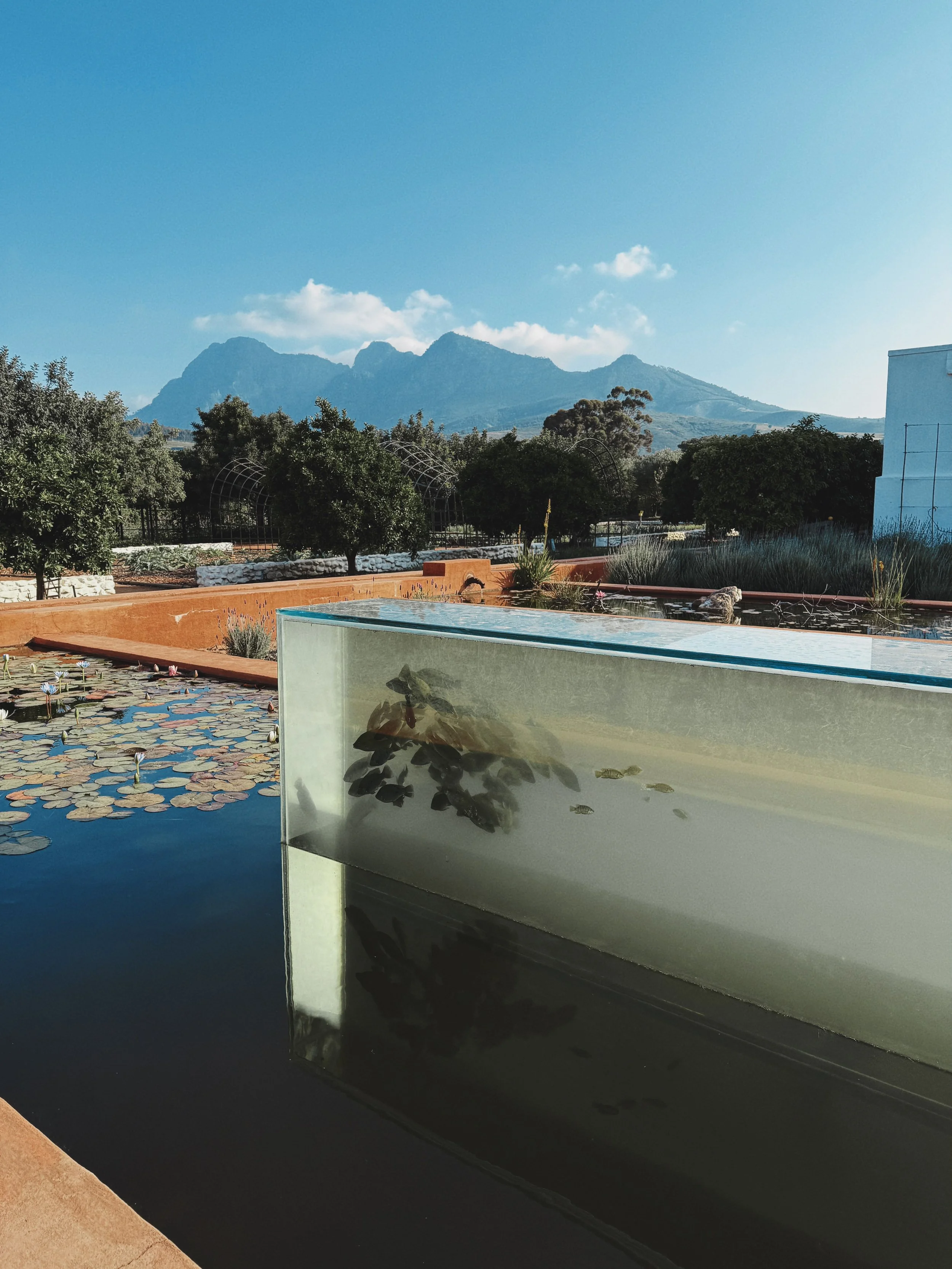
A working postcard: Cape Dutch buildings, gravel underfoot, orchards, vines, and a garden stitched like a quilt—edited abundance, not manicured vanity. You can spend twenty minutes photographing the ground because even the paths are considered. (I did.) Rope off any 50 m² of this garden and, if you saw it at a friend’s place, you’d compliment them on how good it looks. Here, you get hundreds of those patches, side by side. The exception becomes the norm.
Rooms are nice rather than 5-star glamorous—which fits a farm. Ours had a real fireplace with stacked wood (we used it). Favourite tiny touch: leave a book on your nightstand and housekeeping slides in a bookmark. Small, human—and exactly the kind of cue you retell later.
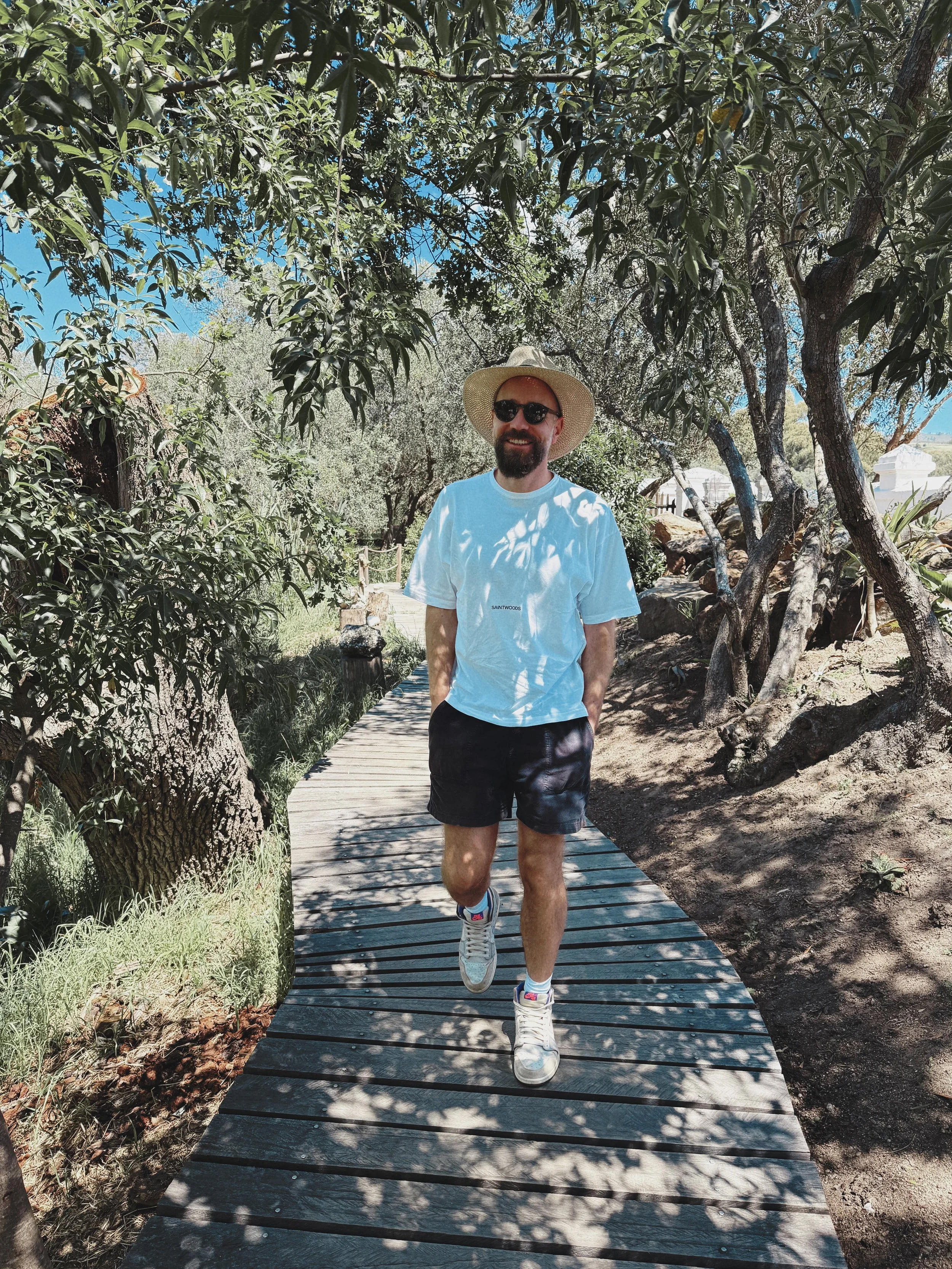
Wellies wait in the room. That’s the brief: wander, don’t tiptoe. Mornings started misty; by late morning spring sun took over. We barely left for 48 hours—once for dinner in town, otherwise happily “stuck” on the farm.
The garden (and why it works)
It’s the scale and sequencing: geometric beds give way to a hint of wild; citrus to herbs to espaliered fruit; then a bench that invites you to look at nothing in particular. I found a Eureka lemon and immediately wanted one for our place in Merano. Crucially, you’re invited to pick and taste—the permission that turns a pretty garden into an experience.
Breakfast that bends tables
I’ve never seen a breakfast like it. Fruit that tastes like fruit. Some of the best olives and figs we’ve ever had. Cheeses and buffalo yoghurts with a straight line to the dairy. Breads you’d only find at an artisan bakery at home. This isn’t “hotel breakfast”; it’s a still life you can eat.
The buffalo (and the coin jar)
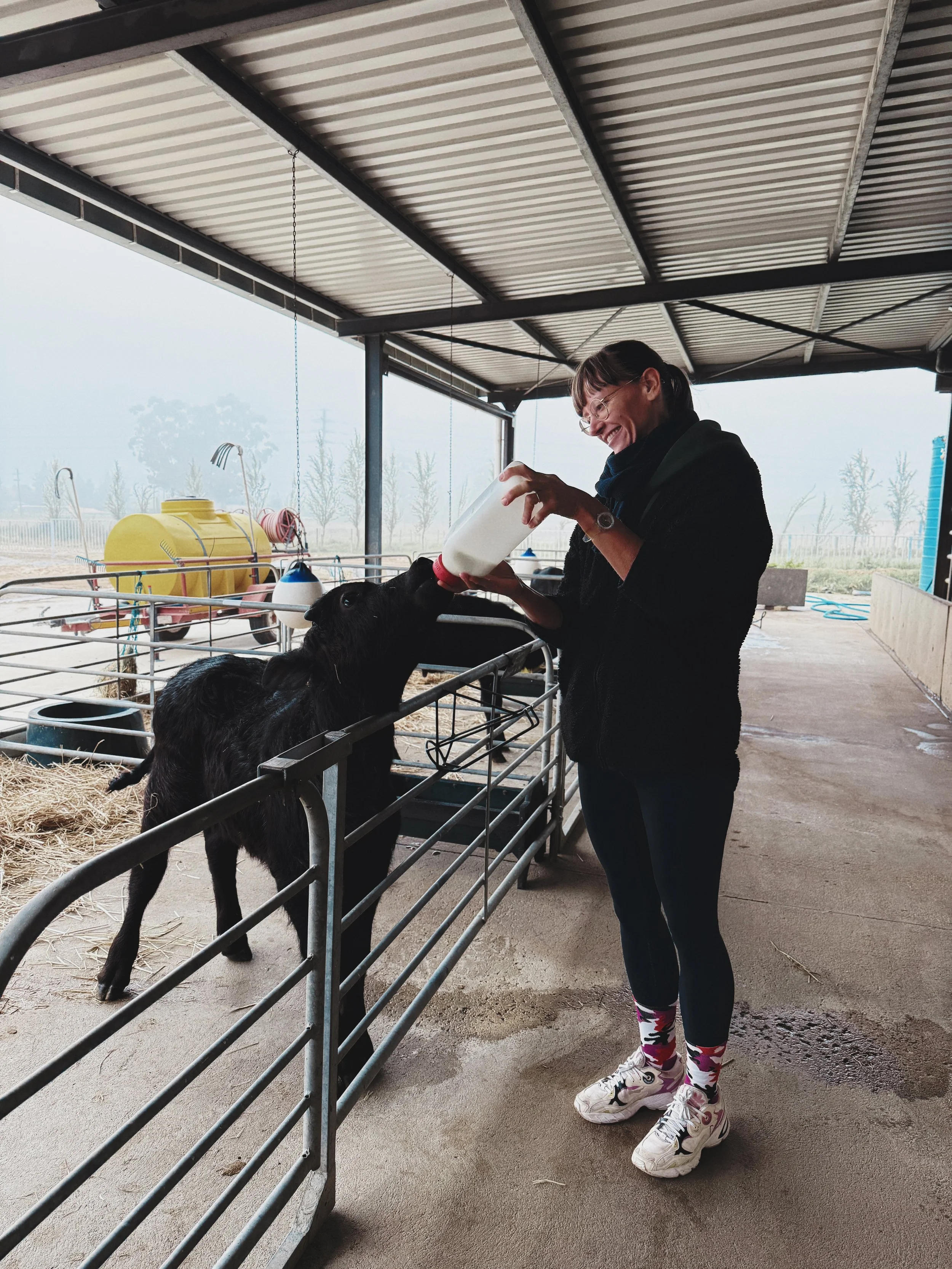
They chose water buffalo over cows, so the dairy has a distinct personality. A cow can yield up to ~20 litres a day; a buffalo is closer to ~5. The milk is rich and bright; you meet it again in mozzarella and gelato. We fed calves (the wellies earn their keep) and heard about the name-the-calf jar: drop in a coin with your name and, when there’s a newborn, yours might be drawn. Really charming—and a word-of-mouth machine. (Their marketing is full of touches like this—I might write a separate piece on it.)
Workshops, play, and a drive up the koppie
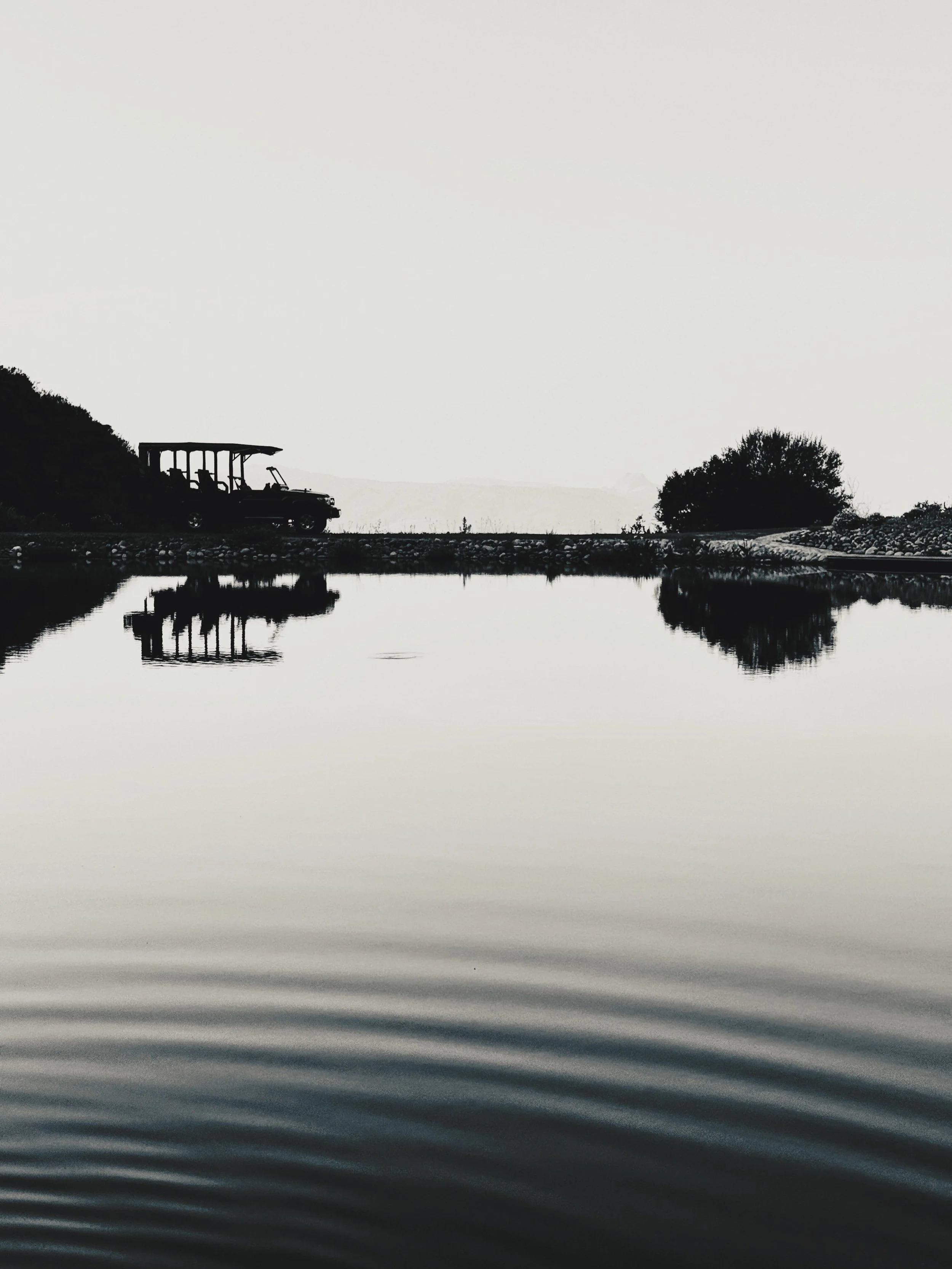
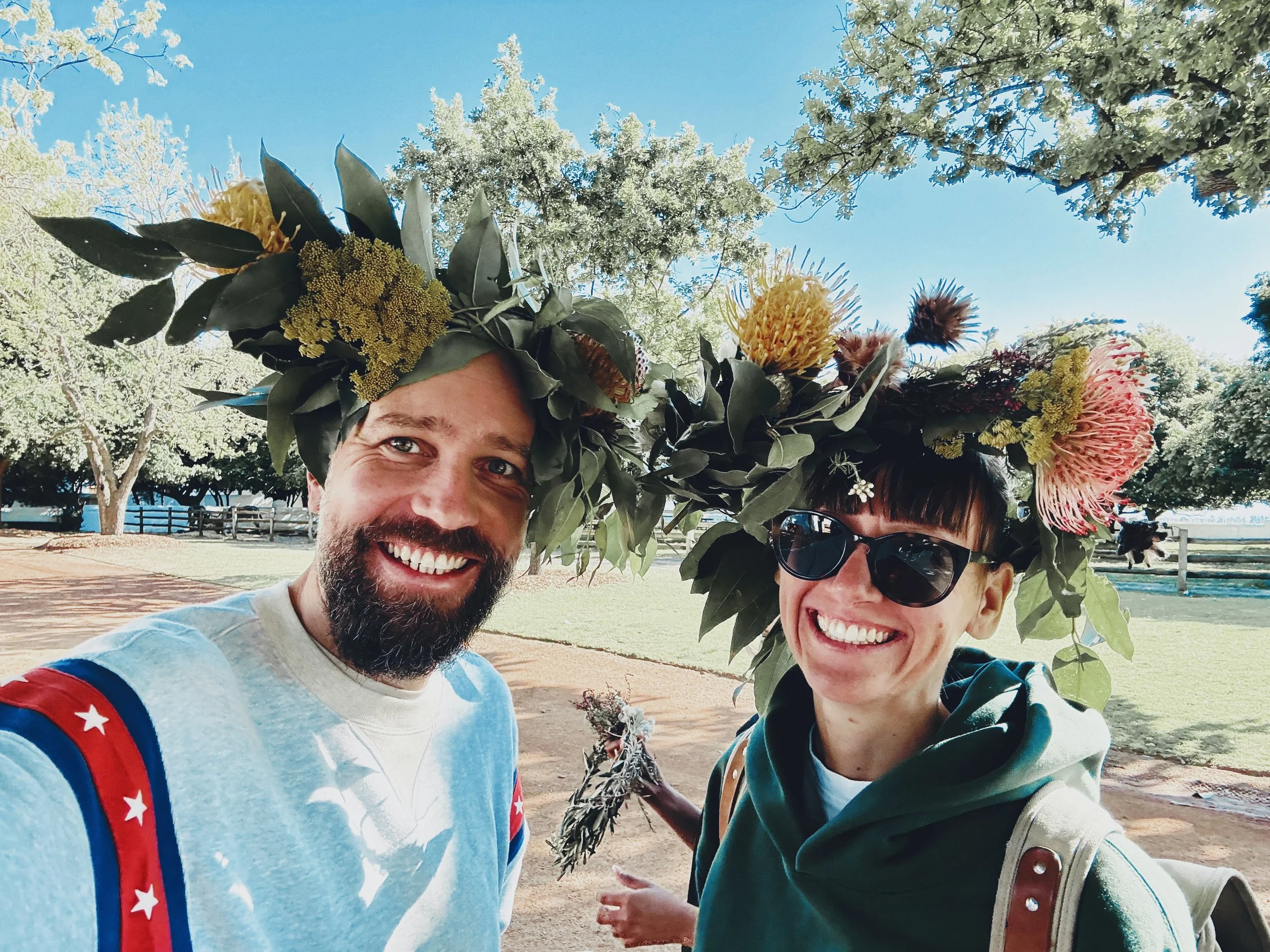
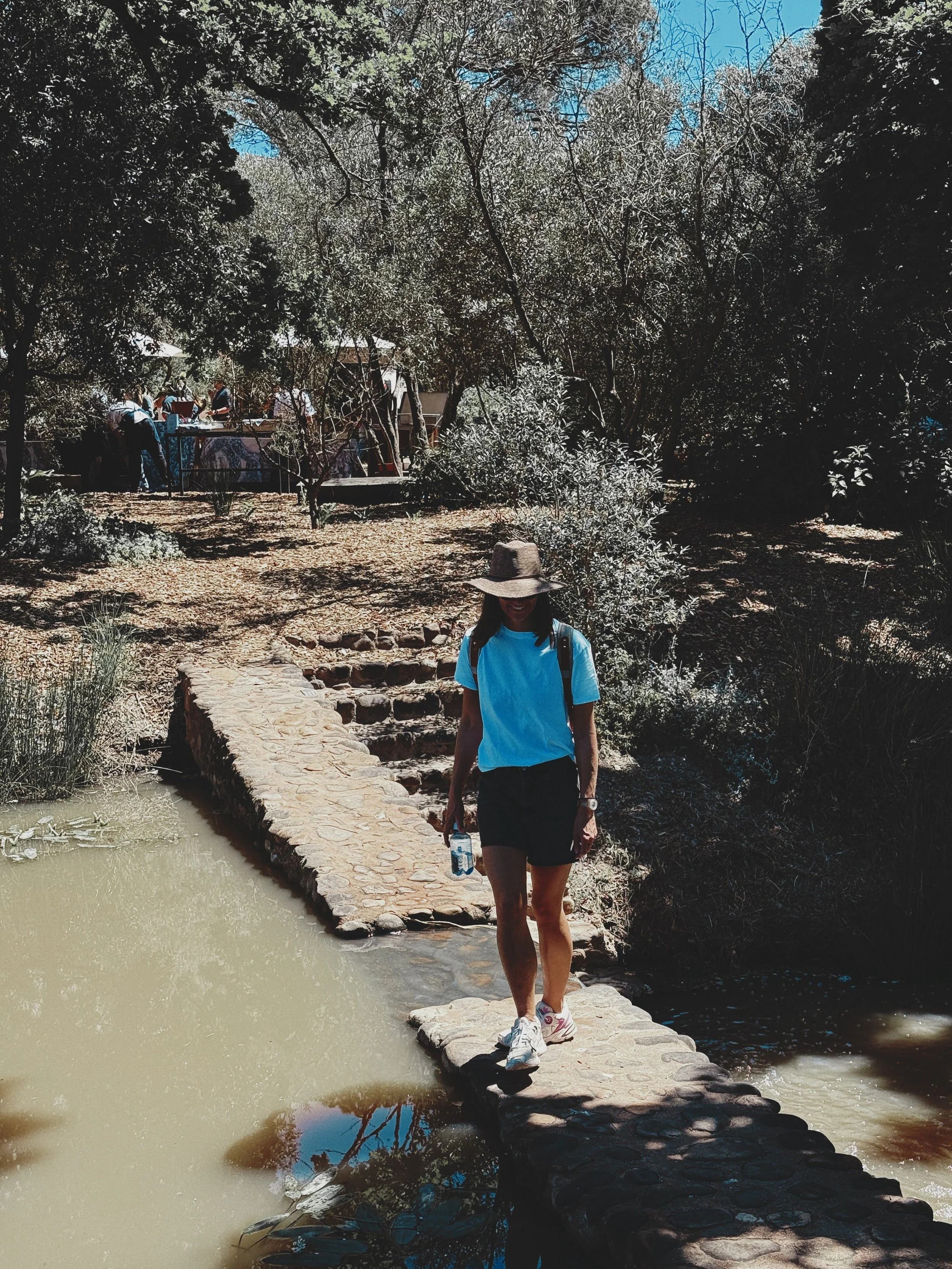
We did an essential-oils demo where leaves turned to scent, braided flower crowns, joined a short bread-baking class, then swapped aprons for bikes. There’s a small road up the farm’s koppie to a natural pool. The view isn’t big drama (we have plenty at home in South Tyrol); it’s the quiet pleasure of seeing the whole patchwork at once—vineyards, dams, garden lines. We picnicked at the dam with a basket that felt deliberately put together. Kayaks waited. We didn’t need more.

People, not polish
Best of all: the people. Everyone we met brought time and ownership—as if it were theirs. More than once someone put down what they were doing to walk us somewhere or answer a question, not in a scripted way but like a longtime neighbour.
At breakfast we met Jonathan. He’s been here since almost the beginning—about fifteen years. Between topping up coffee and pointing out what was in season, he told us the simple idea behind the place: don’t sell a product but an experience. You feel that line in the way a day unfolds—unhurried, intentional, with just enough surprise.
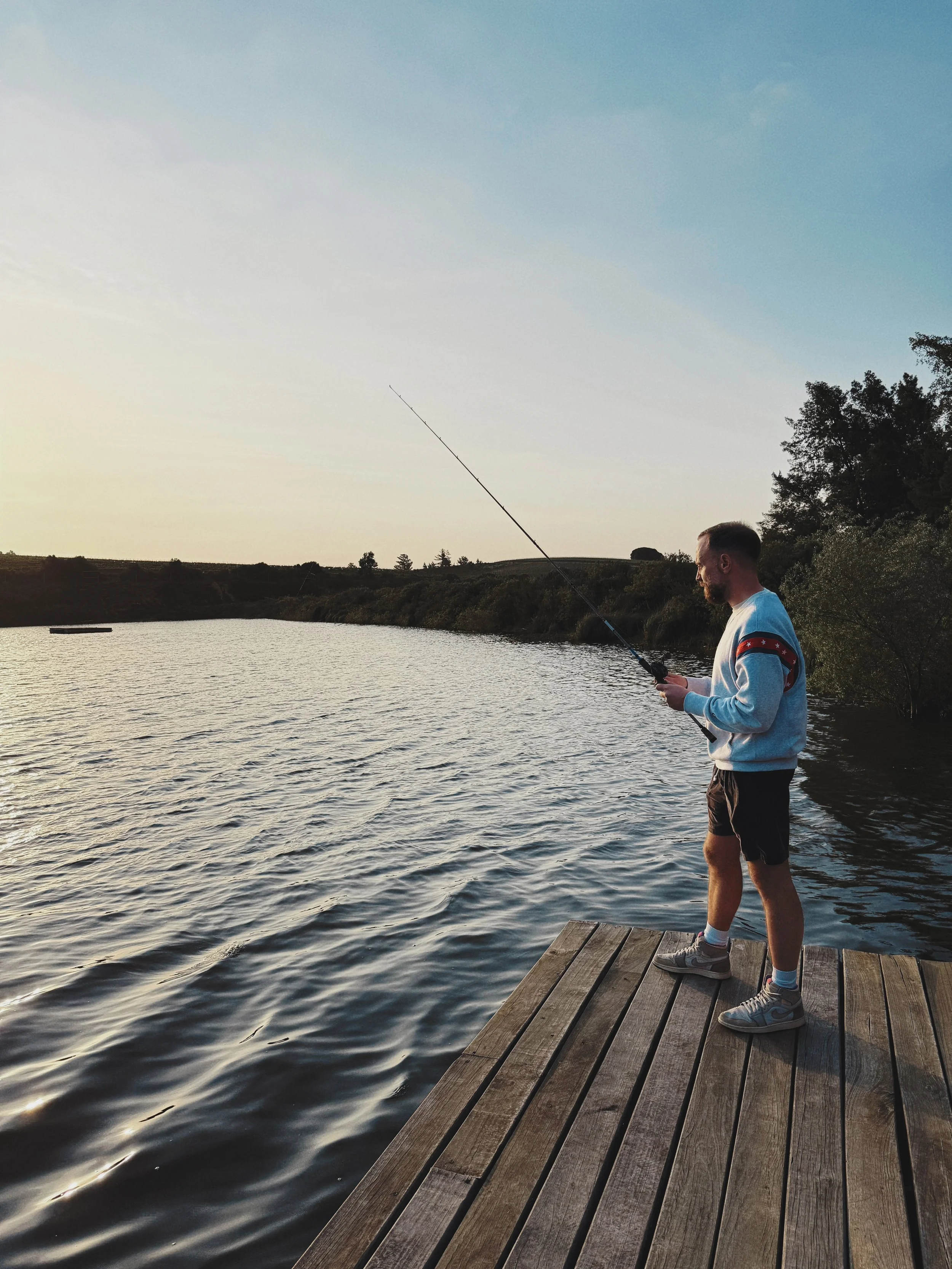
Warren we met at the buffalo tour. During our picnic at the dam I asked if he could show me the basics of fly-fishing the next day. He carved out thirty minutes from his lunch break and met me at the water—two or three passes, a tweak to the wrist, line straightened—and a bass obliged. Small lesson; the afternoon shifted around it.
At harvest the operation scales to a small army—up to roughly a thousand people—and even in springtime you feel it in the choreography. Things appear the moment you wonder about them, and disappear as soon as you’re done.
Three honest notes
Babel at dinner didn’t match the rest for us. The room read cool and a little buzzy—more refined canteen than anniversary spot. Staff were lovely and service was on point, but the atmosphere lacked the warmth we felt everywhere else. For a date night, we’d book elsewhere in and around Stellenbosch next time (and keep Babel for breakfast/daylight, where it shines).
Workshops skim the surface. In the moment I wanted more depth; later I liked the breathing room—they leave space to explore on your own.
Day visitors add a hum midday. Sometimes it edges toward “theme-parky.” If you can, shape your day around early mornings and late afternoons—the calm is worth it.
The afterglow
Babylonstoren sits with me in a way most places don’t. It’s been almost a month and I’m still replaying tiny moments—the bookmark that appeared, the quiet fire, that breakfast and especially the kind people. I haven’t experienced another stay quite like it.
Their UK sister, The Newt in Somerset, is now on my list. Different light, same philosophy. I’d love to see how it compares—and what small cues they’ve tucked in there.